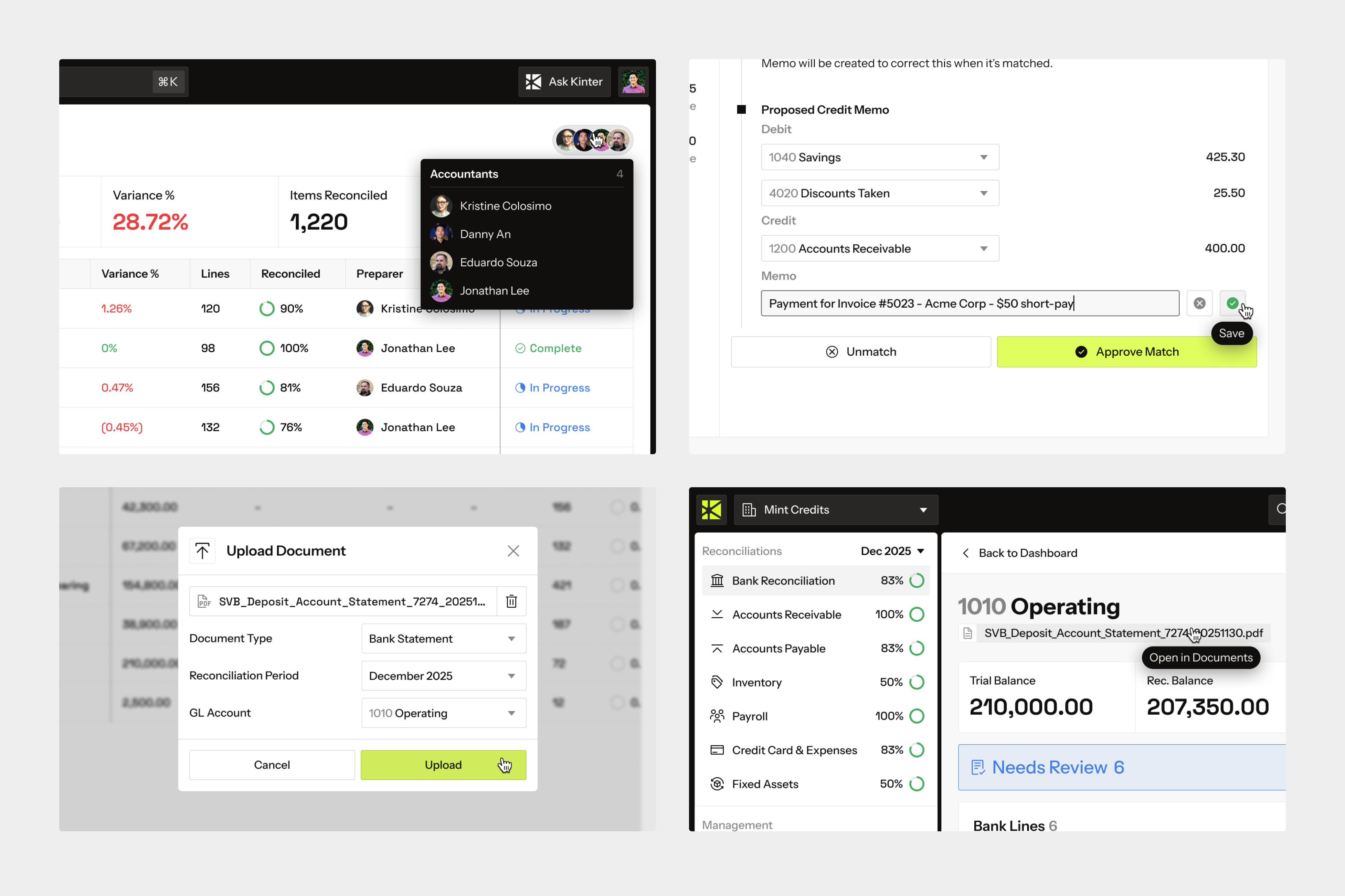
In November of last year, my current company, Alloy Automation, decided to pivot to a new direction and product. The new focus was to develop AI technologies that would integrate accountants and AI agents to tackle time-consuming accounting tasks. The team was challenged to build a proof of concept that we could put into people's hands within four months to get feedback and start validating it.
The team faced two major challenges when we started working on the new product. First, the accounting problem space was too broad, which led to uncertainty about the MVP we should build. Second, problems in the accounting domain require specific technical expertise to be properly understood and addressed, and no one on the team had that expertise. To address these gaps, we hired an accounting consultant and established a design partner program.
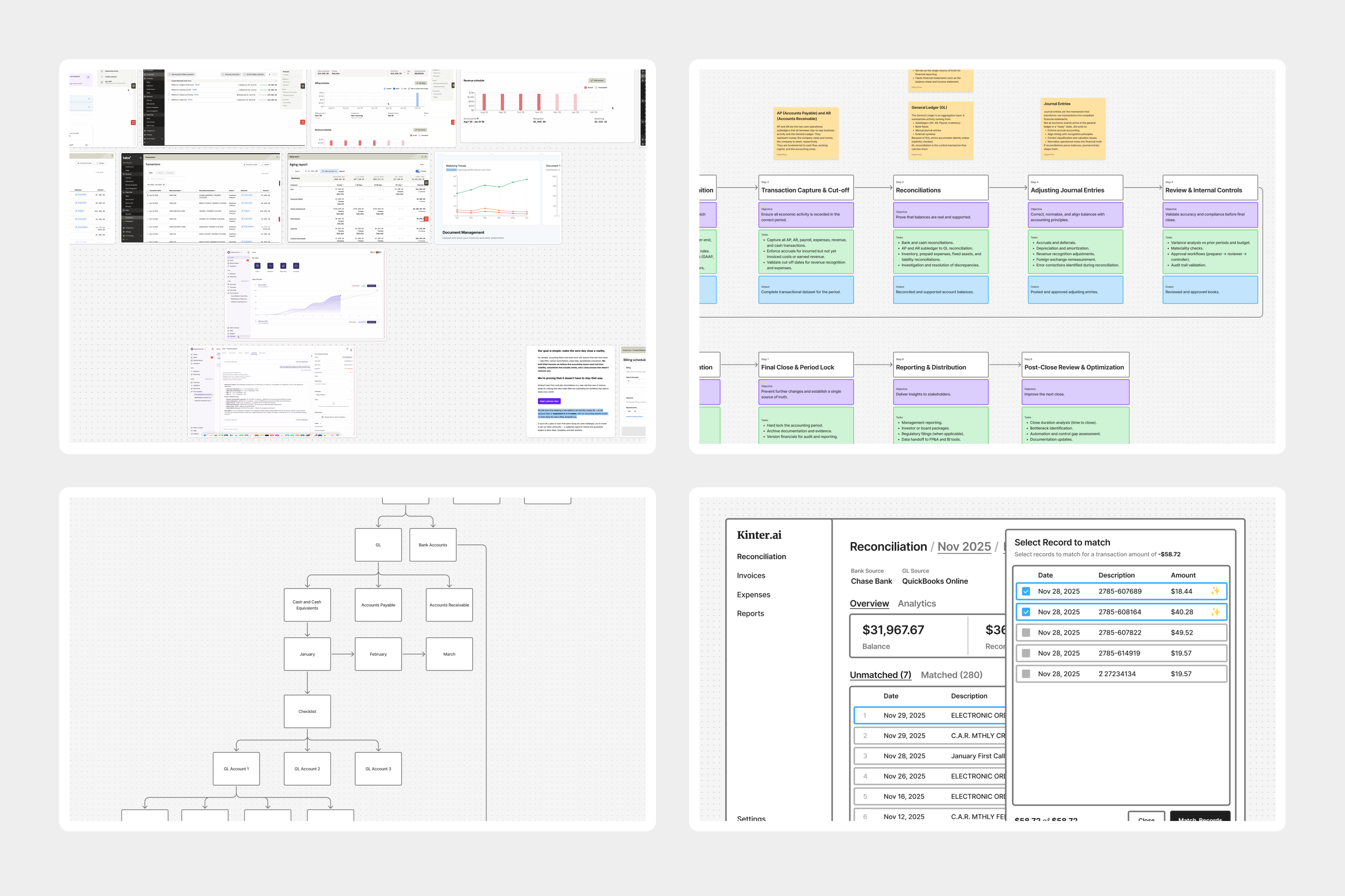
The exploration phase was intensive and required a range of tools and methods, including competitor analysis, accounting process mapping, consultancy sessions, user journey development, information architecture definition, and low-fidelity prototyping.
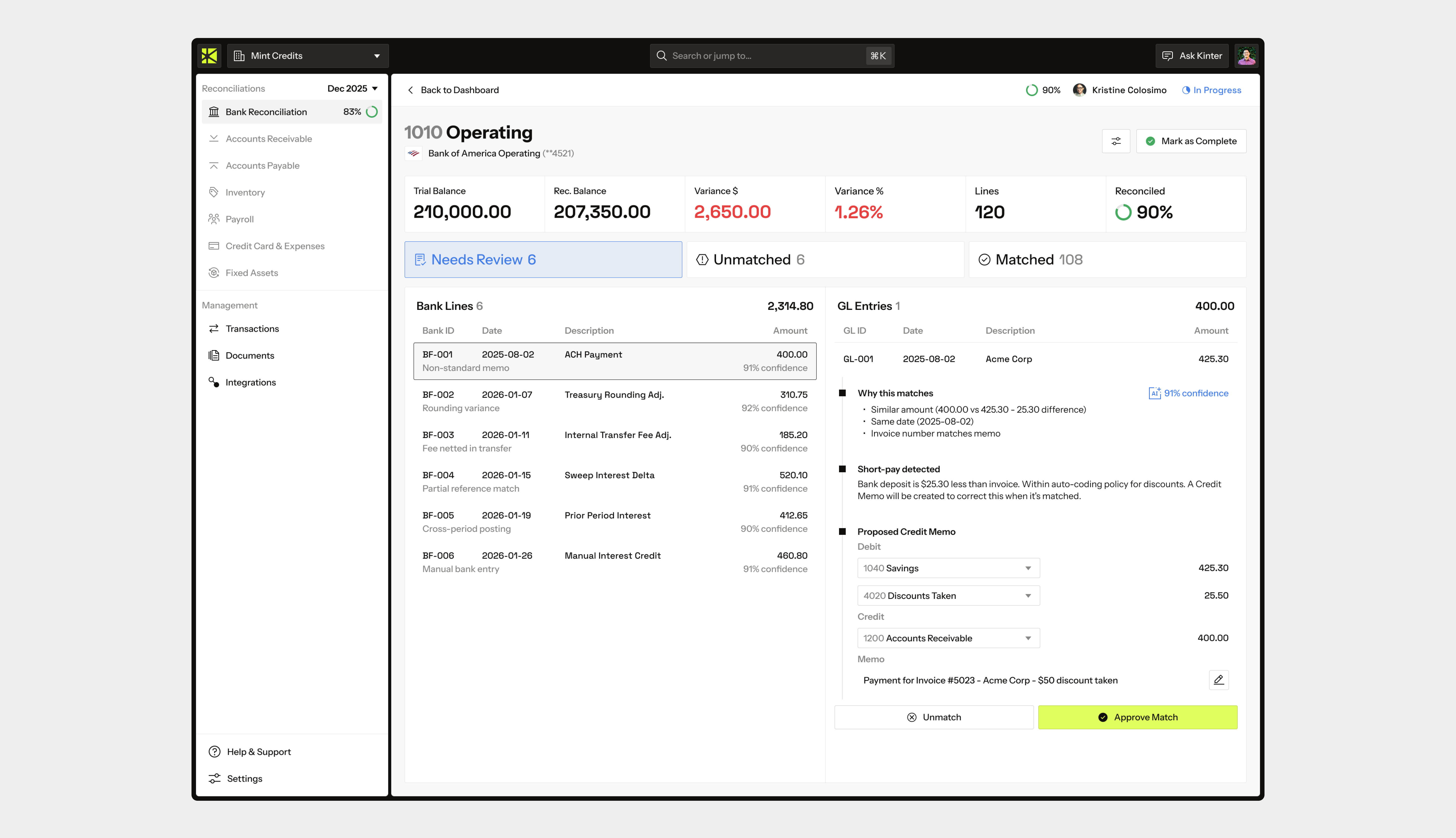
After several rounds of market research, consulting sessions, and exploratory work, the team decided to prioritize the Month-End Close—specifically the bank reconciliation process—since it is a critical, manual, and time-consuming task.
Bank reconciliation presented an ideal opportunity for AI-driven automation. It is highly manual, requires extensive document analysis, and demands close alignment among accountants. Moreover, it is a universal process across companies of all sizes and industries, which made it easier to recruit design partners to validate our solutions.
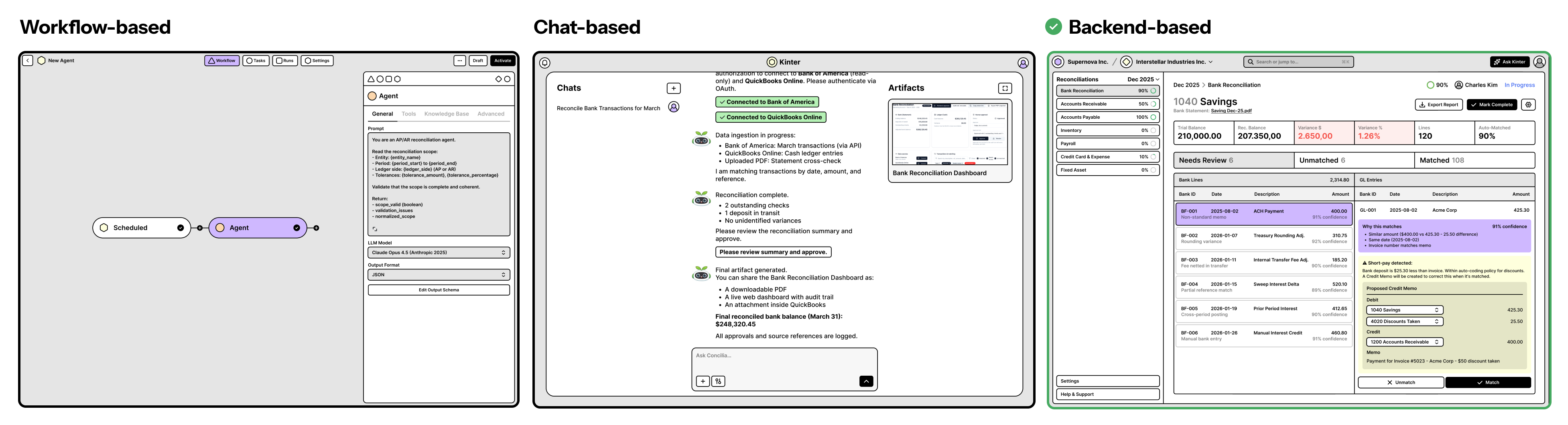
We explored three design approaches for the core product experience: a workflow-based model where users could define their own reconciliation flows, a chat-based interface leveraging conversational AI, and a backend-driven approach where users accessed agent-processed data through dashboards and more traditional interfaces.
We chose the latter after recognizing that accountants in more traditional markets often have limited technical proficiency and prefer familiar UI patterns such as spreadsheets and dashboards.
From zero to a working, validated product, our goal was to build Month-End Close Agents capable of automating the entire close process with AI, starting with bank reconciliation.
To meet our timeline, we adopted a highly collaborative model in which the boundaries between product, design, and engineering were intentionally blurred. PMs delivered functional prototypes, designers built and iterated through rapid coding, and engineers translated designs while refining the experience. Everyone operated as a maker, aligned around a single objective: building a product customers genuinely value.
This approach enabled fast iteration and tight feedback loops with our design partners and accounting consultant, significantly accelerating validation and product-market fit.
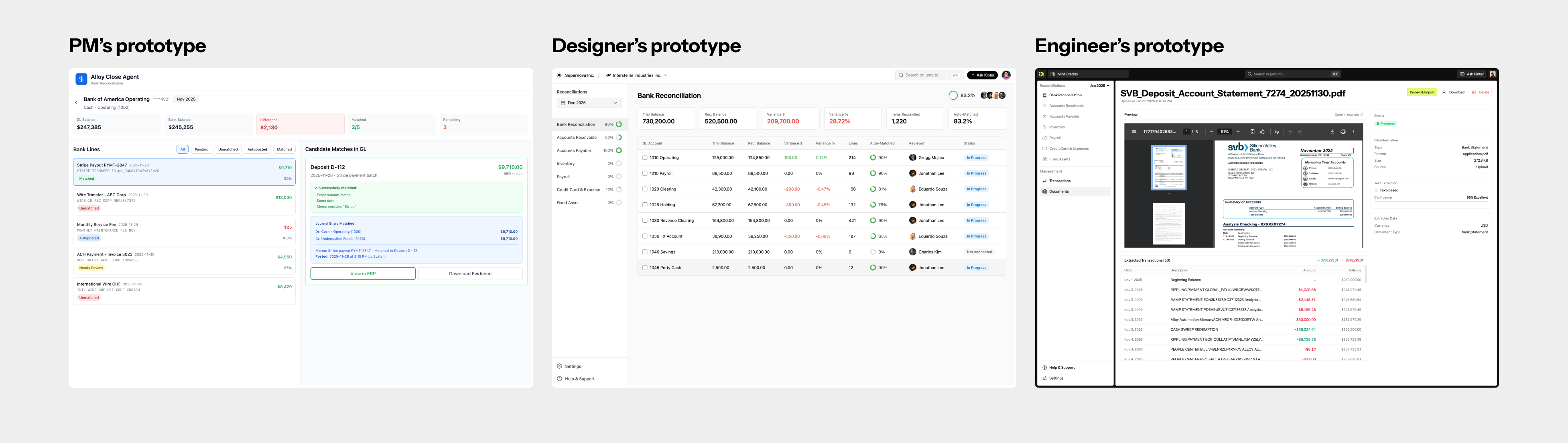
Throughout the exploration cycle, everyone presented their ideas through functional prototypes that could be reviewed, refined, and tested directly with users for feedback. In the AI era, everyone is a maker.
We adopted a product design approach in which AI operates under the hood. Agent servers are positioned not as replacements, but as collaborative coworkers for accountants. Rather than asking, “How can we use AI here?”, we focused on, “What does the user actually need?” and then identified where AI could quietly remove friction and add value.
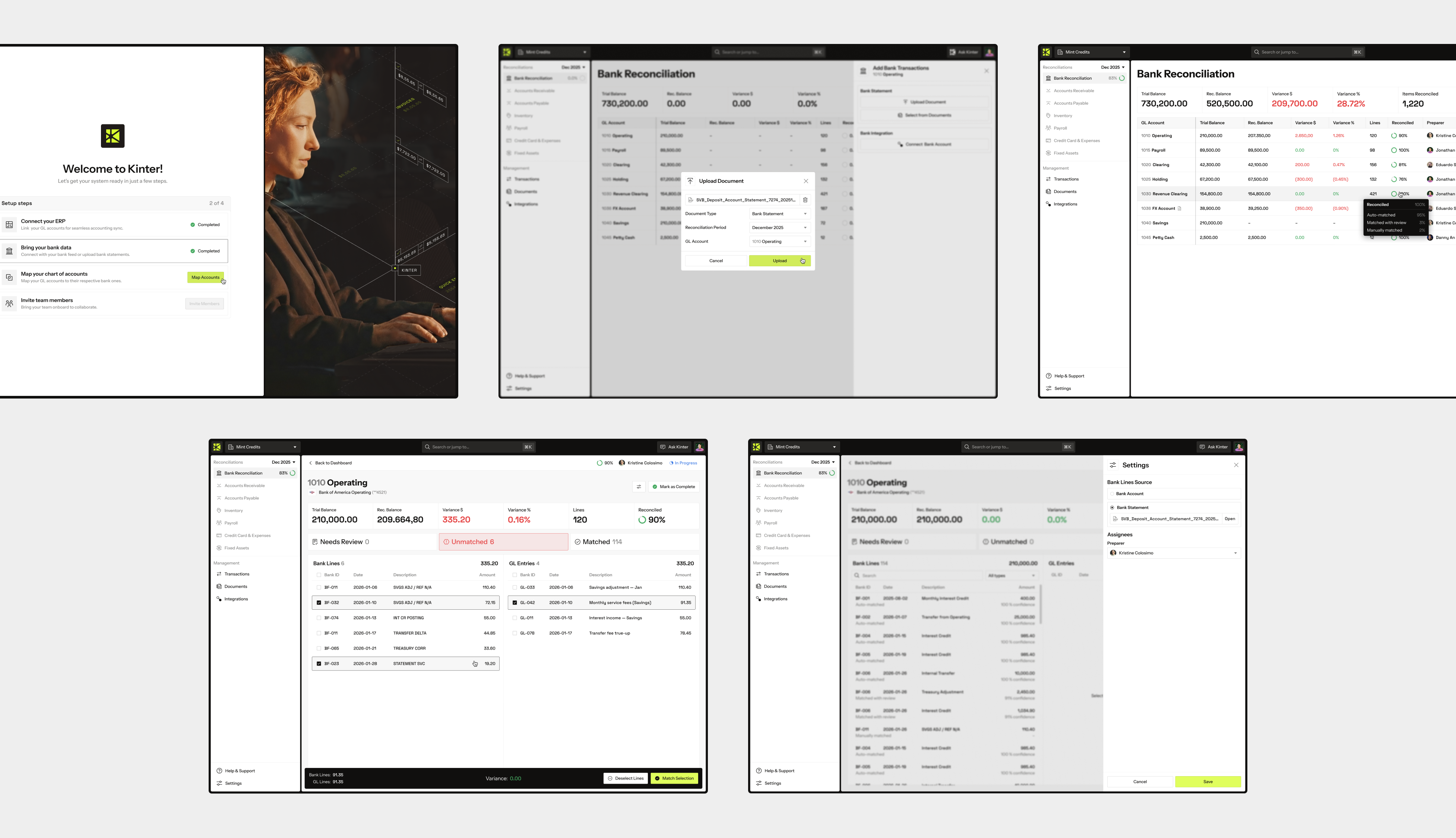
Many accountants in less digitalized markets have limited technological proficiency. By designing agents to work alongside humans—augmenting their workflows rather than disrupting them—we enabled faster, more accurate execution while freeing professionals to focus on higher-value, strategic activities.
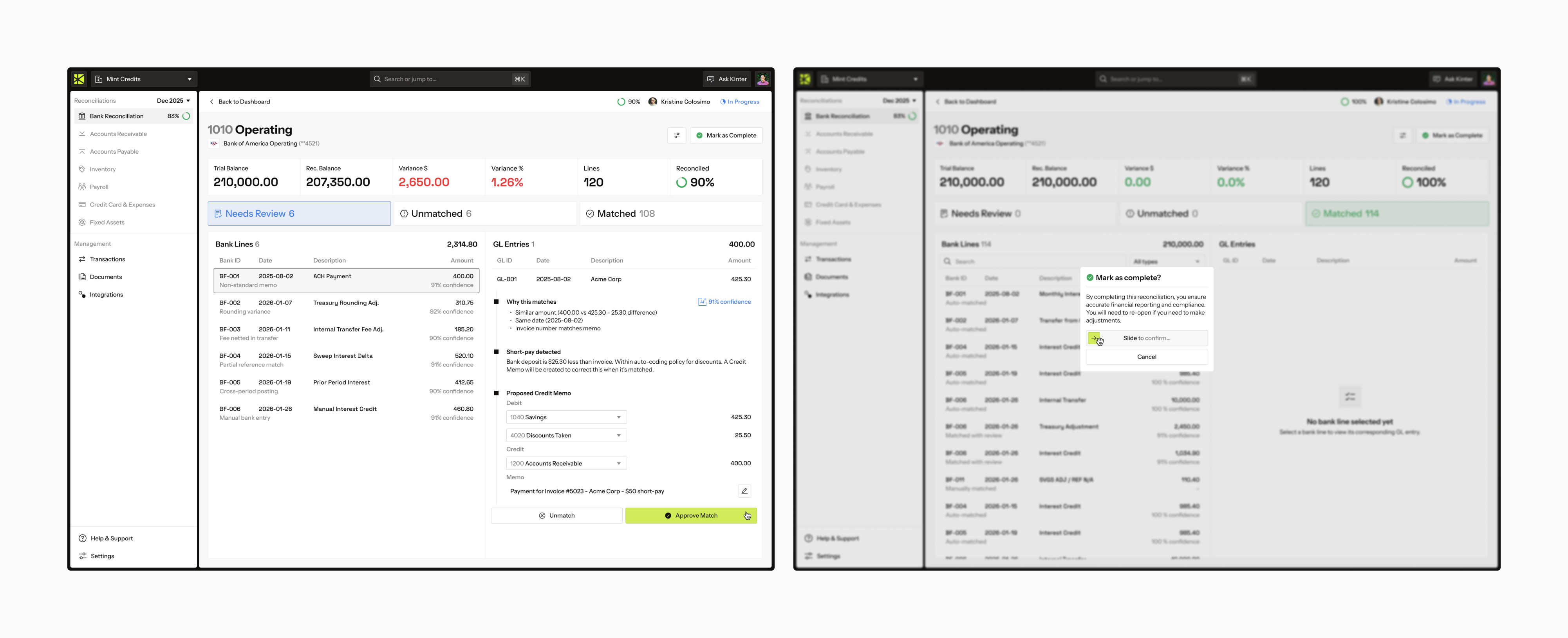
We moved from 0→1 within the planned timeframe and shipped a tangible product prototype, enabling real-world validation instead of theoretical positioning. Once prospects could interact with the product, design partner commitments increased from 2 to 7 (+250%), materially strengthening early validation and enterprise pipeline confidence.
We established weekly working sessions with partners to maintain a tight feedback loop, accelerating iteration cycles and positioning the team to move from 1→10 — scaling the solution toward commercialization.